

Book of the Month August 2026: Why Maier and Rechtin’s The Art of Systems Architecting Remains Essential Reading
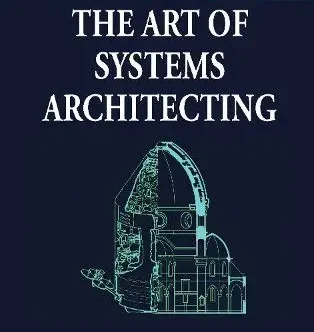
Some books earn their place on the shelf by being right early. Rechtin’s The Art of Systems Architecting, first published in 1991, challenged the engineering orthodoxy of its time by arguing that the front end of systems design and systems architecture is not simply a calculation—it is an art.
Systems architecting begins with an ill-structured problem, a demanding client, and competing constraints, then moves toward a feasible, coherent, and buildable concept. Rechtin’s instrument for navigating this complexity was the heuristic: distilled, portable judgment developed through the experience of skilled practitioners.
“Don’t assume that the original statement of the problem is necessarily the best, or even the right one.”
It remains one of the finest principles ever written about systems architecture.
The Fourth Edition: More Relevant Than Ever for Enterprise Architects
Maier, who joined Rechtin as co-author from the second edition and continued the work after Rechtin’s death, has now produced a fourth edition of The Art of Systems Architecting. For enterprise architects, this may be the most relevant edition yet.
Two developments stand out.
1. Architecture Description and ISO/IEC/IEEE 42010
First, the book’s treatment of architecture description has matured alongside the international standards that Maier himself helped shape.
Maier chaired the IEEE 1471 working group. Its conceptual model—stakeholders with concerns, addressed through viewpoints and represented in views—ultimately became ISO/IEC/IEEE 42010, the international standard for architecture description.
The fourth edition integrates this material into the core discussion rather than treating it as an appendix for standards and compliance specialists.
For enterprise architects, systems architects, and software architects, this lineage matters. ISO/IEC/IEEE 42010 provides an open, de jure standard for describing architecture across disciplines, creating a shared language between systems engineering, software architecture, and enterprise architecture.
Reading the principles of architecture description explained by one of the standard’s principal authors is valuable in its own right.
2. MBSE, Digital Engineering, and the Role of Architectural Judgment
The fourth edition also takes Model-Based Systems Engineering (MBSE) and digital engineering seriously. Importantly, it does not present formal modelling as a replacement for heuristic architecting.
Instead, the book shows how qualitative architectural reasoning and formal modelling can reinforce one another.
This is an important distinction in modern systems engineering. The growing sophistication of digital engineering can create the temptation to assume that greater model fidelity eliminates the need for human judgment.
Maier’s argument is more nuanced: models sharpen architectural judgment, but they cannot replace it.
The book’s integrated treatment of heuristics, architectural decision-making, MBSE, and modelling methods demonstrates how these approaches can work together in practice. Case studies of successful and unsuccessful architectural decisions in major systems add practical weight to the argument.
Why Enterprise Architects Should Read a Systems Engineering Book
Why should enterprise architects read a book about systems engineering?
Because Maier’s treatment of collaborative systems offers one of the most useful engineering perspectives on what an enterprise actually is.
His long-standing distinction between directed systems and collaborative systems is particularly relevant. In collaborative systems, participants retain independent ownership, interests, and purposes. The architect therefore cannot simply rely on top-down specification and control.
Instead, successful collaborative systems depend on stable intermediate forms, shared structures, and incentives for participation.
This translates directly into enterprise architecture practice.
In engineering vocabulary, it is closely related to the idea that an enterprise architect’s role is not to control a single system, but to create coherence across multiple social, organizational, business, and technological worlds.
What Could Be Better?
The book is not without limitations.
It remains firmly rooted in the world of large-scale technical systems and engineering programmes. Readers looking for detailed guidance on the political economy of enterprise transformation, organizational politics, or change management will need to bring their own organizational and sociological perspective.
The prose also occasionally reveals the book’s layered construction across four editions. And at 519 pages, it requires a serious investment of time.
These are minor criticisms, however, of a book that has influenced three decades of systems architecture and architectural thinking and that, in its fourth edition, speaks more directly to enterprise architecture than ever before.
Verdict: Essential Reading for Systems and Enterprise Architects
If systems engineering and enterprise architecture are two chairs at one table, Maier built much of the table.
The Art of Systems Architecting is essential reading for anyone working in systems architecture, enterprise architecture, systems engineering, MBSE, digital engineering, or architectural decision-making.
Read it. Argue with it. Apply its heuristics to your own architecture practice—and keep it within reach.
Verdict: Essential reading, and a rare classic that improves with every edition.
The book is available from Amazon and other bookstores.
If you want to check our previous Book of the Month selection, you can find it here:
Security Architecture – How & Why? by Tom Madsen
Elephant in the Room: Engaging with the Unsaid in Groups and Organizations by Lotte Svalgaard